Agri Tourism in Konkan: Why Farm Homestays Are the Future of Travel
What Is Agri-Tourism in Konkan?
Agri-tourism places guests inside a working farm rather than beside one. Konkan's rich agricultural landscape - cashew, mango, coconut, betel nut, paddy, and spice cultivation - makes it one of the best regions in India to experience this firsthand.
At a verified agri-tourism farm homestay on kokanhomestays.in, the vegetables on your dinner plate may be ones you helped harvest that afternoon. The coconut oil in your morning dal may have been pressed while you watched.
What Crops Grow in Konkan?
Alphonso (Hapus) mango - GI-tagged, March to June season
Cashew - Maharashtra's largest cashew-producing region, February to April harvest
Coconut - year-round, backbone of Konkan's rural economy
Betel nut (supari) - grown in shaded groves
Paddy (rice) - monsoon crop, transplanting in June-July
Jackfruit (fanas) - April to June
Spices: pepper, turmeric, ginger, cardamom - in mixed orchards
Kokum - a tart fruit unique to the Western Ghats, used in sol kadhi
Farm Activities at a Konkan Agri-Tourism Homestay
Coconut Farming
Coconut palms are the backbone of Konkan's rural economy. On a coconut farm stay, guests watch a skilled tapper climb 20-metre palms barefoot to harvest toddy and coconuts. Activities include scraping coconut using a traditional agadhi, hand-pressing coconut milk, and extracting virgin coconut oil the traditional way.
Best season: Year-round. Peak activity for oil pressing: post-harvest months (October-January).
Cashew Harvest (February to April)
Konkan produces some of India's finest cashews. The harvest period is extraordinary - raw cashews fall in clusters still attached to their apple-like fruits. Guests participate in collection, learn traditional roasting, and eat cashew apples fresh from the tree (a fruit almost impossible to find outside farms).
Best season: February to April. Peak: March. Available at selected farms on kokanhomestays.in.
Mango Orchards (March to June)
During Alphonso season, guests on mango farm homestays learn to identify the right maturity for picking by colour, scent, and feel. They understand the grafting process that produces Hapus trees (Alphonso is never grown from seed - always from a grafted cutting) and eat mangoes still warm from the tree.
A key activity: distinguishing Devgad Alphonso from Ratnagiri Alphonso - a debate your host will happily engage in at length.
Paddy (Rice) Cultivation - Monsoon Season
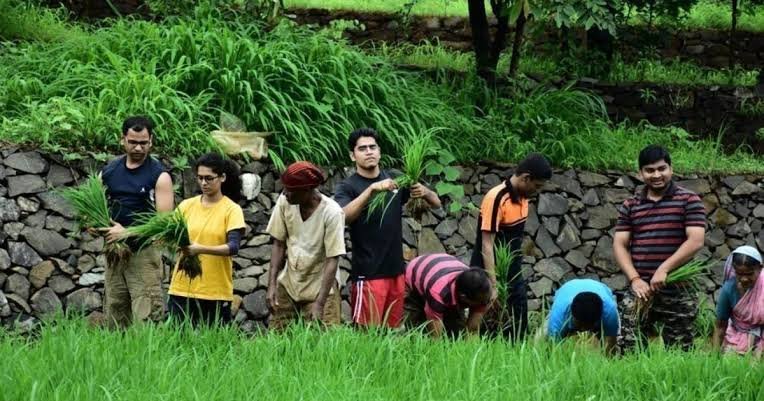
In June and July, the paddy fields surrounding many Konkan homestays are transplanted. Guests wade into flooded fields and try their hand at transplanting seedlings - an intensely physical, joyful, and culturally significant activity. This is a highlight for children.
Best season: June to August. Coincides with monsoon - the most dramatic and lush season visually.
Spice Garden Walks
Many Konkan farm homestays grow pepper, turmeric, ginger, and cardamom alongside their main crops. A spice garden walk with the host - who can describe every plant's culinary and medicinal uses in detail - is a deeply educational experience.
Activity level: Easy walk, suitable for all ages. Duration: 45-60 minutes.
Traditional Food Processing
Beyond growing, farms also process. Activities available at different properties include: stone-grinding masala (the traditional way, before electric grinders), making kokum sharbat from dried kokum, pressing groundnut oil, preparing dried fish (bombil), and making traditional rice papad (papads from rice flour).
The Food Difference on a Farm Homestay
The gap between field and plate at a Konkan farm homestay is sometimes measured in metres. The freshness is immediately perceptible - and it permanently changes how you understand food.
Coconut oil pressed that morning used in the evening curry
Tomatoes from the kitchen garden in the afternoon chutney
Fish bought directly from the boat at the village harbour at 6 am
Alphonso mango pulp for breakfast from a tree in the courtyard
Jaggery made from sugarcane grown on the same land
Maharashtra Agri-Tourism Development Corporation (ATDC)
Maharashtra's government formally recognises agri-tourism through the ATDC (Agri-Tourism Development Corporation), which certifies and provides infrastructure support to qualified farm stays. ATDC certification means:
Minimum quality standards for accommodation and hygiene
Verified agricultural activities on the property
Host families trained in hospitality and safety
Government liability coverage for guests
Several homestays on kokanhomestays.in are ATDC-certified. You can filter by certification status when searching.
Who Is a Konkan Farm Homestay Best For?
Families with children who have limited connection to where food comes from - farm stays are transformative for kids
Travellers who have done Konkan's beaches and forts and want a different, deeper experience
Food enthusiasts who want to understand Konkan cuisine from the ingredient level
Photographers - farm life in golden light provides extraordinary material
Corporate groups looking for team-building experiences in nature
People seeking genuine rest, slow travel, and authentic human connection
Agri-Tourism Konkan vs Other Farm Stay Destinations
Coorg (Karnataka) is famous for coffee plantation stays. Wayanad (Kerala) for tea. Konkan's agri-tourism is distinct because it is coastal agriculture - the combination of sea air, laterite soil, tropical crops, and Malvani cuisine creates an experience found nowhere else in India.
Frequently Asked Questions
Do I need prior farming experience to enjoy an agri-tourism stay?
No experience is required. All activities are guided by the host family. The experience is participatory, not instructional - you join in at whatever level feels comfortable.
Are agri-tourism homestays comfortable?
ATDC-certified farm stays on kokanhomestays.in meet verified comfort standards. Expect clean rooms, attached bathrooms, mosquito nets, and home-cooked meals. The setting is rural, not luxurious - and that is precisely the point.
Can I buy farm produce to take home?
Yes, and this is one of the best things to do. Buy Alphonso mangoes, kokum, homemade cashews, spices, coconut oil, and Malvani masala directly from your host at farm prices - significantly cheaper than markets.
Is agri-tourism suitable for senior travellers?
Absolutely. Most farm activities are gentle and can be participated in at the level that suits you. The slower pace, clean air, and home-cooked food make agri-tourism particularly appealing to older travellers.
What is the difference between agri-tourism and a regular homestay?
A regular homestay provides accommodation in a family home. An agri-tourism homestay adds structured participation in farming activities as part of the stay. Both types are available on kokanhomestays.in.

Written by
Mayur Vichare
A passionate travel blogger who loves exploring new destinations, hidden gems, and local cultures. From scenic getaways to offbeat experiences, they share travel guides, honest tips, and inspiring stories to help readers plan memorable journeys. Their goal is to make travel easier, more exciting, and meaningful for every explorer.
Enjoyed this article? Share it with others!